FungicidesFolicur® SC Fungicide
Powdery Mildew - Wheat
21/06/2026
Blumeria graminis
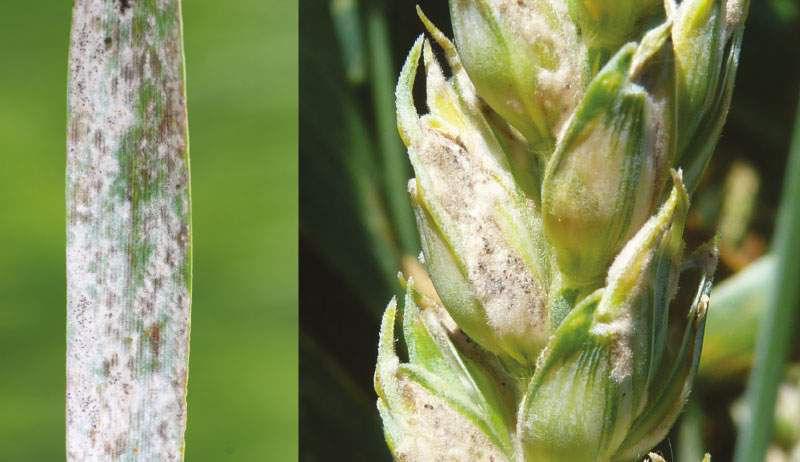
Powdery mildew is a common parasitic fungus of wheat. Powdery mildew produces white, fluffy mycelial growth, usually on the leaves but also on the stems and ears and as the disease only infects the outer plant layers it can be scraped off quite easily. Powdery mildew needs to infect living plant material to survive and so wind borne spores from volunteer plants are the likely source of inoculum. Serious disease infections can lead to significant yield losses.
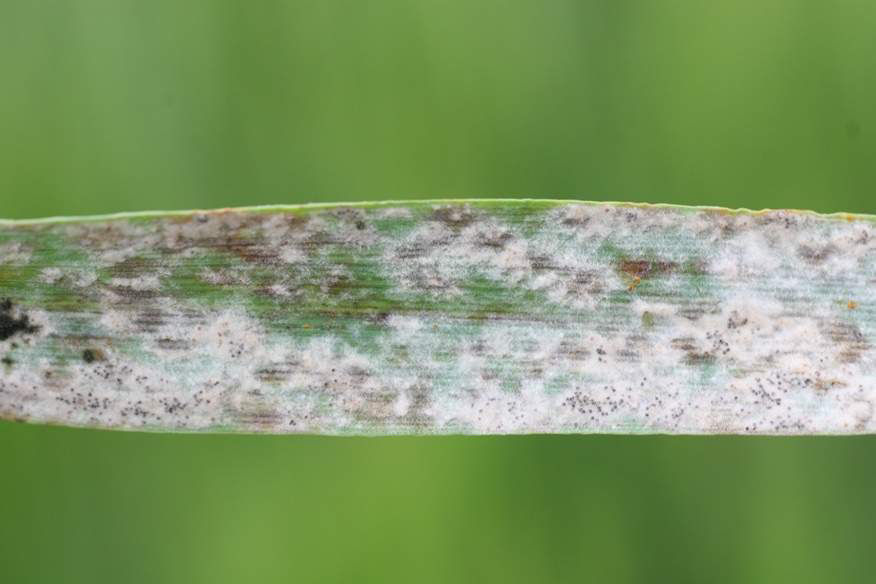
Look out for:
- White surface patches.
- Small black spore cases
Risk factors:
- Cool, cloudy and moist conditions
Initially seen as surface patches of white mycelium, powdery mildew develops to cover the entire leaf. Mature infections often have black spore cases present.
The disease is wind borne and thrives in cool, wet weather.
While normally modest, yield losses of 40% have been recorded.